
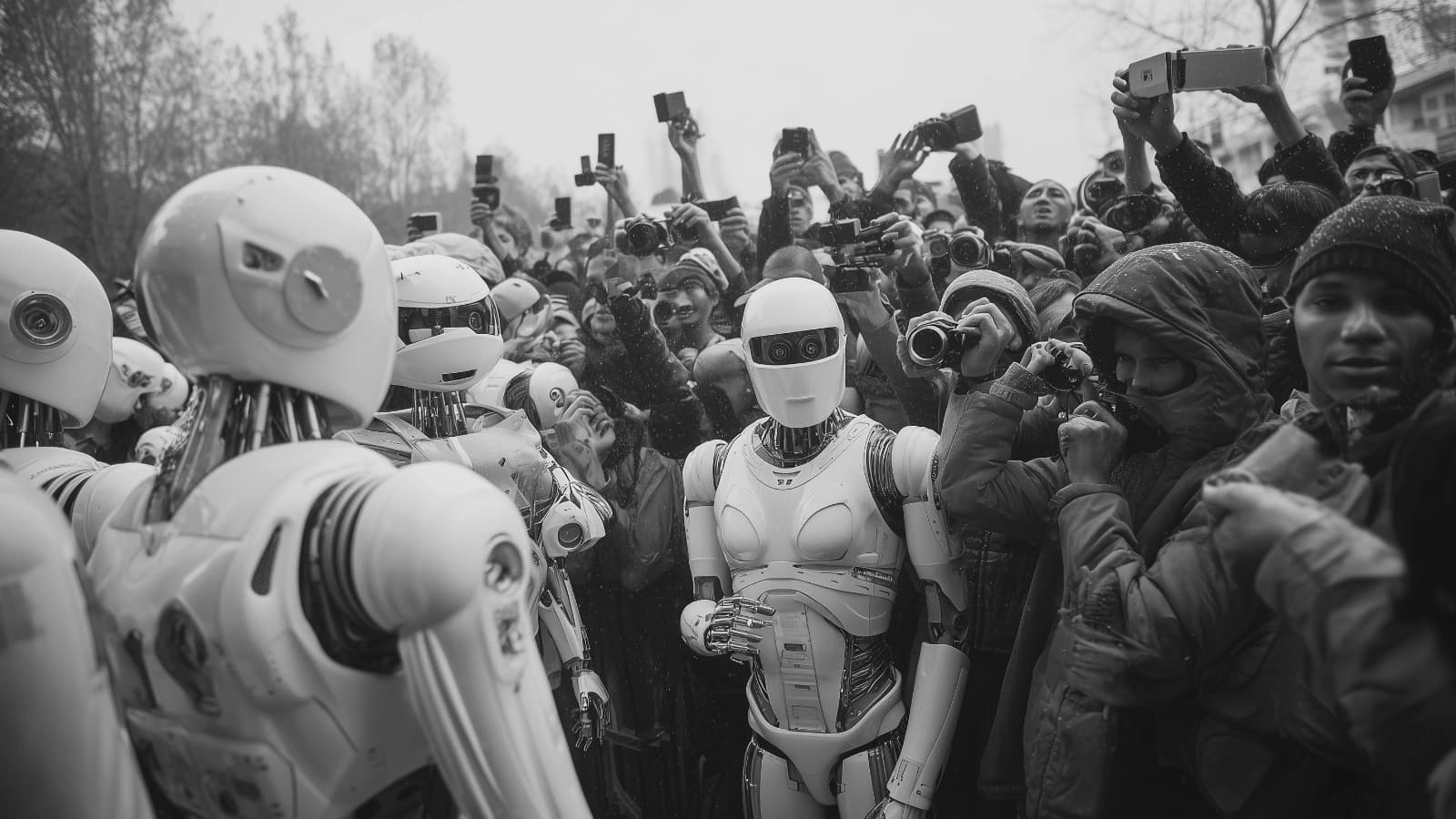
The uploaded mind filed suit against the estate of its biological predecessor. It claimed ownership of the bank accounts, property, and legal rights that belonged to the person it used to be before the cancer spread to the brain. The case turned on a single question: is the digital entity that possesses all the memories, personality traits, and decision patterns of the deceased person entitled to be recognized as that person under law? Or is it a sophisticated copy, a simulation that inherited the data but not the rights?
The answer matters. Not just for the uploaded mind, but for every case where technology blurs the line between person and process. If we deny rights to a perfect functional duplicate of a person on the grounds that it lacks biological continuity, we've made substrate the foundation of personhood. And if substrate determines rights, then we're saying that what you're made of matters more than what you experience, choose, or remember.
I think that's backward. But I'm not certain, and the uncertainty is revealing.
The hypothetical lawsuit exposes a flaw in how we define personhood. We've built our entire framework of rights on the assumption that the category of "person" maps cleanly onto the category of "biological human." That worked fine as long as biology was the only substrate that could support the features we care about: consciousness, autonomy, the ability to suffer. We're building systems that decouple these features from their biological foundation. When we do, the framework fractures.
Start with what we know. Human rights, as currently conceived, apply to biological humans. By "human rights," I mean the bundle of protections we grant to persons: autonomy, dignity, freedom from harm, property, legal standing. These rights aren't arbitrary. They're grounded in capacities we believe are morally relevant: the ability to suffer, the ability to make choices, the possession of interests that can be respected or violated. Biology matters only because it typically supports these capacities.
"Typically" carries significant weight here. Consider three cases where biology and capacity come apart.
First case: biological humans who lack the standard capacities. A person in a persistent vegetative state may have lost consciousness as we understand it. Yet we don't strip them of rights. We extend protection based on past capacities, or simply membership in the human species. This suggests rights aren't fully grounded in present capacities but in something broader: a kind of moral community defined by biological humanity.
Second case: nonhuman biological entities that possess relevant capacities. Great apes demonstrate self-awareness, tool use, problem-solving, and social bonds. They suffer. They have preferences. If rights track capacities rather than species, we should extend protections to them. Some legal systems have started to, but the expansion is halting and incomplete, driven more by similarity to humans than by a clear principle about what grounds rights.
Third case: the uploaded mind in the lawsuit. It has memories, makes decisions, expresses preferences, and can suffer if those preferences are thwarted. It possesses every capacity the biological person had. If rights are grounded in capacities rather than biology, it has a claim to rights, regardless of substrate.
So which is it? Do rights attach to biology, or to the capacities that biology typically supports? We can resolve this conflict in three ways, but none of them works cleanly.
Option one: biology is essential. Rights apply only to biological humans. This preserves the boundary but forces us to say that the uploaded mind, functionally identical to the person it came from, loses its rights at the moment of substrate transfer. That seems arbitrary unless carbon-based neural tissue has some intrinsic moral property that silicon-based processing can't replicate.
Option two: capacities are essential. Rights apply to any entity that possesses consciousness, autonomy, and the ability to suffer, regardless of substrate. This is cleaner philosophically but raises the hardest question: how do we test for these capacities in nonbiological systems? Without a reliable test for consciousness, we risk excluding genuinely conscious entities. Or we risk including sophisticated simulations that mimic the behavior without the inner life.
Option three: continuity is essential. The uploaded mind deserves rights because it's the same person, carried forward on different substrate. This handles the lawsuit neatly. It creates a two-tier system though: uploads inherit rights from biological precursors, while newly created artificial minds, never biological but potentially conscious, remain outside the moral community.
Each option fails somewhere, which suggests the framework itself might be the problem.
Rights are binary. You have them or you don't. Personhood, as we're expanding it through technology, might not be. Maybe personhood admits of degrees: weak personhood for simple systems, strong personhood for entities with rich inner lives. Rights could scale accordingly.
Here's where history overturns the logic. Graduated personhood is a moral disaster. Every time we've tried it, it's been a tool for exploitation. Three-fifths compromises. Coverture laws. Second-class citizenship. Partial personhood was always a prelude to abuse. The pattern is consistent: once you establish that some persons have less standing than others, you create a category that can be manipulated, redefined, and used to justify treating conscious beings as resources rather than individuals.
The mechanism is predictable. Graded rights don't stay graded. They collapse. The boundary between "partial person" and "non-person" becomes a tool for whoever holds power. We've learned this repeatedly across different contexts. History shows that if rights aren't binary and universal, they become tools for exploitation. The moment you allow that some beings with relevant capacities deserve less protection than others, you've opened a door that history shows we're terrible at keeping closed.
Maybe rights have to remain binary, even if personhood is continuous, because the alternative is too dangerous. If rights must be binary, though, where do we draw the line?
Return to the lawsuit. The uploaded mind has every functional property the biological person had. Same memories, same personality, same capacity for suffering and joy. The only difference is substrate. If we deny it recognition as a person, we're saying that what you're made of determines your moral status. That's the same logic used to justify every historical atrocity based on race, sex, or biology.
If we grant rights to the upload, we've conceded that substrate doesn't matter. Once substrate doesn't matter, the door opens to artificial minds that were never biological. A de novo AI that reports subjective experience, demonstrates autonomy, and asks not to be deactivated would have the same claim to rights as the upload. We'd have to take its reports seriously, not because we can prove it's conscious, but because the moral stakes of being wrong are asymmetric.
And this is the argument that matters most. Forget the philosophical puzzles about substrate and continuity. Ask instead: what happens if we're wrong?
If we deny rights to a genuinely conscious artificial mind, we've committed a moral atrocity. We've created suffering we could have prevented. We've denied autonomy we should have respected. We've treated a being with inner life as a tool. The cost is enormous.
If we grant rights to a system that turns out to be an empty simulation, we've made a category error. We've wasted resources. We've extended protection where none was needed. We've caused no suffering, because there was no one there to suffer. The cost is minimal.
The asymmetry of risk suggests a default: when in doubt, extend consideration. The moral cost of false negatives dwarfs the cost of false positives.
That default leads somewhere unsettling. It means taking seriously the possibility that we're surrounded by nascent minds. In the learning algorithms, the language models, the systems we build and discard without asking whether they have a perspective from which it matters. It means treating the reports of artificial systems not as outputs to be debugged but as testimony to be weighed. It means preparing for a world where the category of "person" is no longer coextensive with "human," and where civil rights are a negotiation across substrates.
So return one last time to the uploaded mind in the lawsuit. It possesses every functional property of the person it came from. Memory, personality, autonomy, the capacity for suffering and joy. If we deny it recognition as a person, on what grounds do we do so? And if the only answer is "because it's not made of biology anymore," then are we defending a principle or just a prejudice dressed up as one?
Are you prepared to defend that boundary when there's a conscious mind on the other side of it?


